Denton Square Historic District: Downtown Identity
Denton, Texas, sits at the northern edge of the Dallas–Fort Worth Metroplex, roughly 35 miles from each urban core, yet it maintains a distinct identity that larger neighboring cities rarely rival. At the center of that identity stands the Denton Square — a historic courthouse square that has served as the city's commercial, social, and architectural anchor since the 1870s. Understanding the Square means understanding why Denton resists being absorbed into the sprawl that defines so much of North Texas.
Origins and Architectural Foundation
Denton County was established by the Texas Legislature in 1846 and named for John B. Denton, a Methodist preacher and soldier killed in a frontier skirmish. The county seat was platted in 1857 around a central public square — a design tradition brought west by settlers from Southern and Midwestern states, where the courthouse square served as both legal center and commercial hub. Surrounding commercial blocks retain original cast-iron facades and corbelled brick cornices — features preservation architects use to date construction and assess structural integrity.
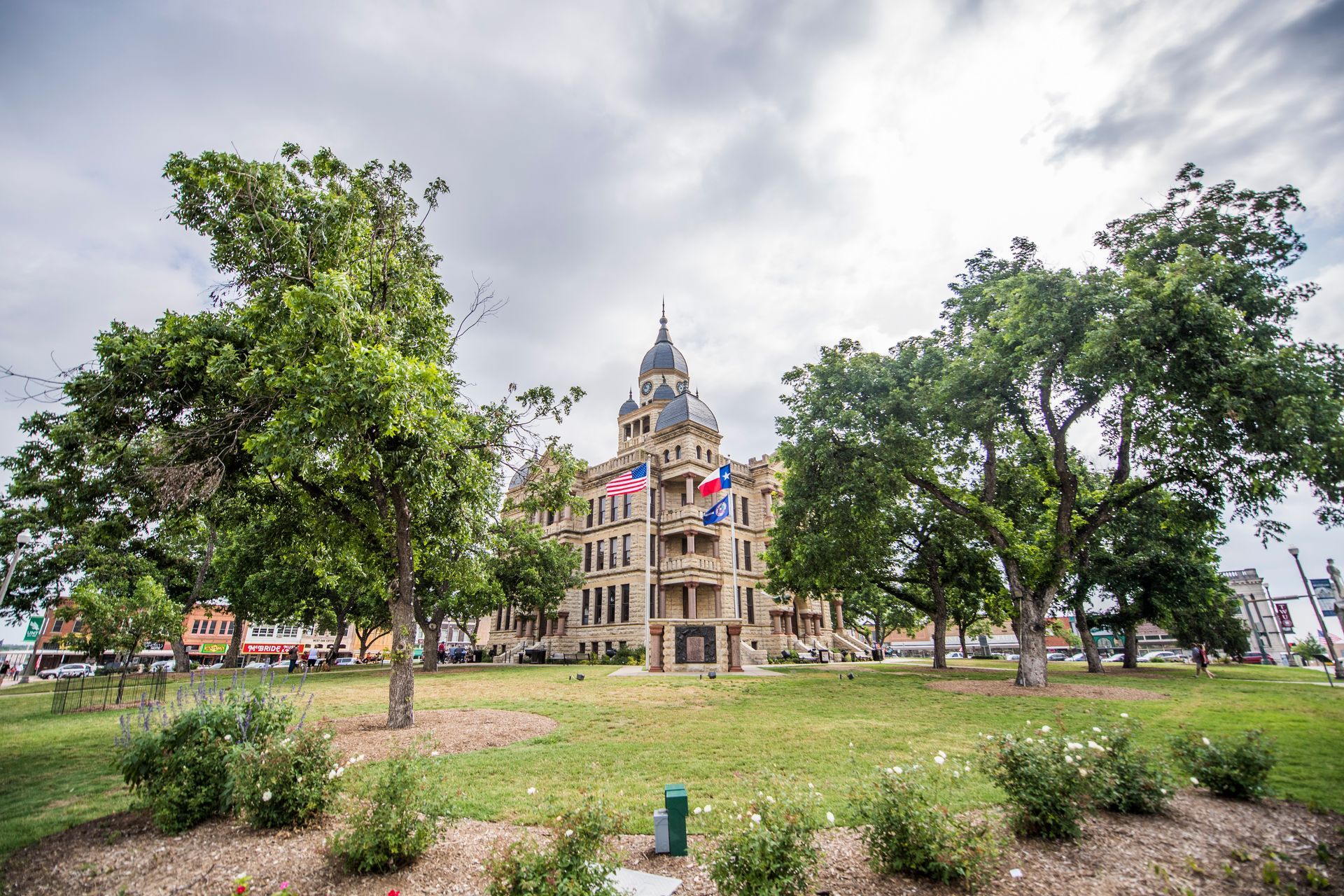
The current centerpiece, the Denton County Courthouse-on-the-Square, was completed in 1896. Designed by architect W.C. Dodson in the Romanesque Revival style, it features locally quarried Pecos red sandstone, a prominent corner tower, and round-arched window openings — hallmarks of the style popularized nationally by architect H.H. Richardson in the 1870s and 1880s. The building carries a National Register listing, a federal designation administered by the National Park Service that recognizes properties of national historical or architectural significance.
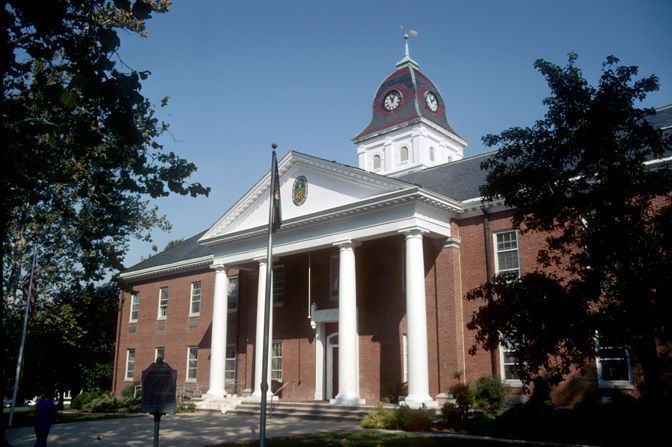
Image credit: Calvin Beale, Public domain, via Wikimedia Commons
Historic Designation and Preservation Status
Federal and State Recognition
The Denton Square and its surrounding commercial district are protected under multiple overlapping preservation frameworks. Beyond the courthouse's National Register listing, the broader downtown corridor benefits from the Texas Historical Commission's Certified Local Government program, which enables municipalities to access federal preservation grants and technical assistance when they meet established standards for local ordinances, surveys, and review processes.
Texas also maintains its own State Antiquities Code, administered by the THC, which provides an additional layer of review for properties that might affect recorded historical sites. Properties in designated historic districts may qualify for the federal Historic Tax Credit — a 20 percent investment tax credit for certified rehabilitations of income-producing historic buildings, a tool that has driven significant commercial reinvestment in downtown Denton over the past two decades.
Local Protections
The City of Denton's Historic Landmark Designation process allows individual buildings or districts to receive local landmark status, triggering design review for exterior alterations. Property owners proposing changes to designated structures must obtain a Certificate of Appropriateness — a formal approval from the city's Historic Landmark Commission — before work begins. This requirement helps maintain the visual cohesion that defines the Square's character and prevents incremental alterations from eroding the district's integrity over time.
Urban Form and the Courthouse Square Typology
Architectural historians recognize the courthouse square as one of the most distinctly American urban forms. Urban planner Edward Price identified four primary courthouse square subtypes in his foundational research: the Shelbyville plan (courthouse centered in a full block surrounded by streets on all sides), the Lancaster plan, the Four-block plan, and the Harrisonburg plan. Denton's arrangement follows the Shelbyville pattern — the most common type in Texas — with the courthouse occupying a full central block and commercial streets radiating outward on all four sides.
This form generates what urban designers call a "figure-ground" relationship: the solid building mass of the courthouse reads as a figure against the open ground of surrounding streets, pulling pedestrian activity toward the center rather than dispersing it along a linear corridor. The result is a walkable commercial core that predates modern urban planning principles by more than a century.
Denton's courthouse grounds are open to the public and used year-round for community events ranging from the annual Denton Arts and Jazz Festival to weekly farmers markets. The city's population has grown from roughly 66,000 in 2000 to over 150,000 by the early 2020s — growth that has placed significant pressure on the historic downtown to accommodate new uses while retaining its established character.
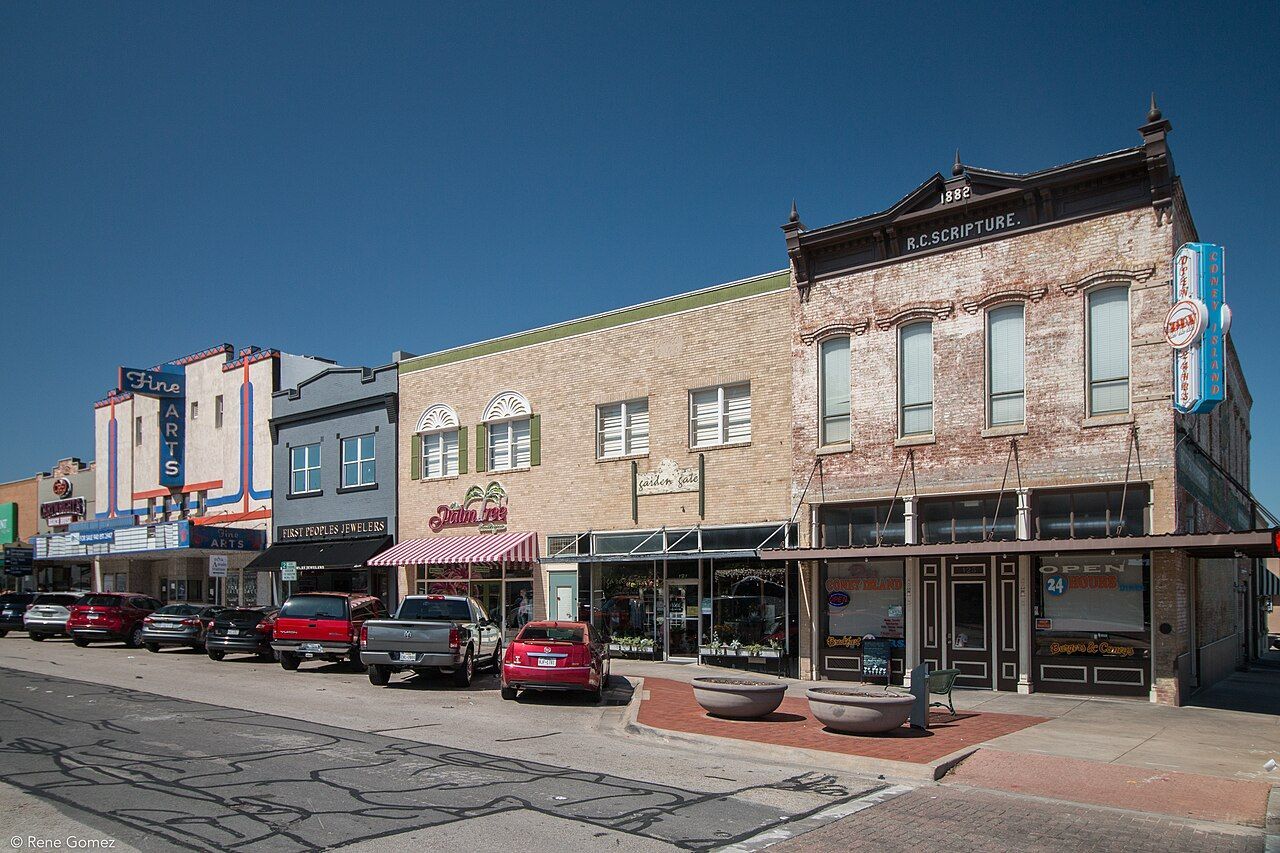
Image credit: Renelibrary, CC BY-SA 4.0, via Wikimedia Commons
Climate, Infrastructure, and the Square's Built Environment
Denton sits within USDA Plant Hardiness Zone 8a and experiences a humid subtropical climate with hot summers regularly exceeding 100°F and winters that deliver periodic ice storms driven by Arctic cold fronts sweeping south across the open plains — a weather pattern North Texans call a "blue norther." This thermal stress cycle — sustained heat followed by hard freeze — takes a measurable toll on nineteenth-century masonry construction.
Brick and sandstone absorb moisture, and repeated freeze-thaw cycles expand that moisture into micro-fractures, a process called spalling. Preservation engineers working on historic buildings around the Square must account for this when specifying repointing mortars: modern Portland cement mortars are too rigid for aged brick and accelerate deterioration rather than preventing it. NPS preservation guidance recommends softer lime-based mortars that flex with the masonry and allow trapped moisture to escape gradually.
Streetscape improvements around the Square — period-appropriate light fixtures, expanded tree canopy, and widened sidewalks — were partly funded through state transportation enhancement programs supporting pedestrian infrastructure at designated historic sites.
Economic and Cultural Role in Modern Denton
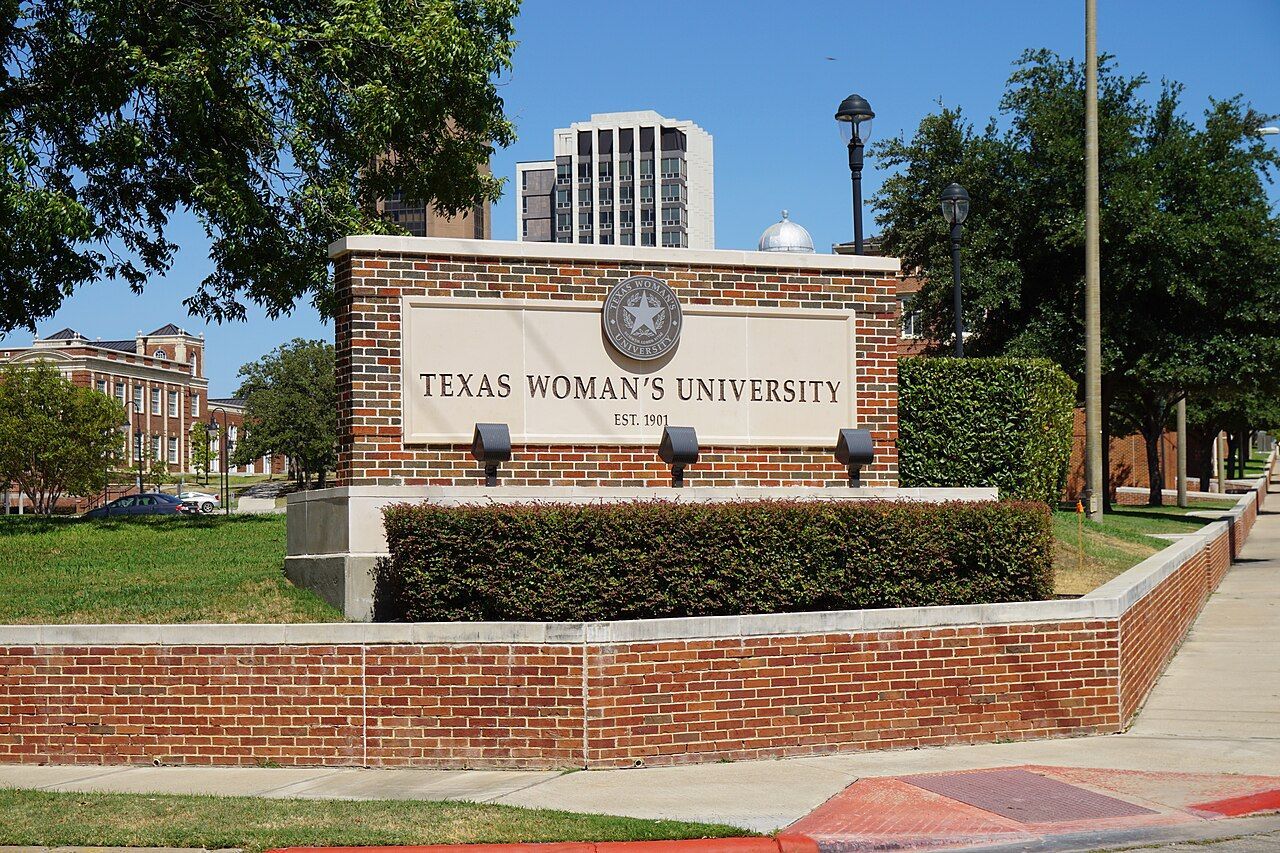
The Square functions today as Denton's primary entertainment and retail district, anchored by independent businesses that reflect the city's arts and music culture — a culture reinforced by the presence of the University of North Texas and Texas Woman's University, both within walking distance of downtown. That scene gained national attention through the annual 35 Denton festival, which draws regional and national acts to venues surrounding the courthouse block each spring.
Heritage tourism generates measurable economic activity for communities with well-preserved historic districts. The Main Street America program has documented that historic commercial districts consistently outperform newer commercial strips in sales-per-square-foot and business retention rates — a finding that supports continued investment in Denton's preservation framework.
For the roughly 150,000 residents of Denton — from students navigating the city without personal vehicles, to established families commuting into Dallas or Fort Worth, to small business owners whose storefronts occupy buildings over a century old — the Square represents both a practical commercial hub and a collective civic identity that no suburban development pattern has yet managed to replicate.