Check Engine Learn Library
Yes — a car can run perfectly with a steady check engine light on. A solid light means the computer logged a fault it wants checked soon; 'runs fine' usually means the problem — a loose gas cap, an oxygen sensor, or a slowly failing catalytic converter — simply hasn't grown big enough to feel yet, not that it's safe to ignore. A flashing light is the exception: that means stop driving now. Below, why it drives normally, the causes cheapest-first, and how long you can safely wait — reviewed by our ASE-certified technicians.
The Short Answer
If the light is on steady and the car drives normally, you generally have a little time — a few days to get it looked at, not months of ignoring it. The one hard exception is a flashing check engine light: that means an active, damaging misfire, and you should stop driving and get it towed. That flashing-versus-solid distinction has its own full guide; here we focus on the far more common case — a steady light with a car that feels completely fine.
Runs Fine Doesn't Mean Nothing's Wrong
This is the part almost no one explains: the reason it feels normal isn't that the problem is minor — it's that the engine computer is very good at hiding small faults until they grow. Here's what's actually happening.
Common Causes, Cheapest First
When a car runs fine, the cause is usually one of these — listed roughly least to most expensive, each with why it doesn't change how the car drives.
We don't price these over the phone — the range is wide and the wrong guess is expensive. The diagnosis comes first, and the number arrives in a written estimate before any work.
How Long Can You Wait?
The reason 'it runs fine, so I'll wait' backfires is that small faults feed bigger ones. Here's the most common chain.
This is why 'runs fine' is the best time to fix it, not a reason to wait — the cheap window closes quietly.
Safe to Keep Driving — With Cautions
A steady light on a car that feels fine usually gives you a short window. Here's how to use it without getting caught out.
Any of these means the small problem is growing — don't keep waiting.
For a steady light with no other symptoms, a short wait is usually fine.
The rule: a steady light buys you days, not months — and only as long as nothing new shows up.
The Reassurance-Trap Myths
'It feels fine' is exactly the belief these myths feed on.
It'll turn off on its own, so I can ignore it.
A light can self-clear if the fault stops tripping, but the cause usually remains and it comes back. Self-clearing is not the same as self-fixing.
If I can't feel it, nothing's wrong.
The computer hides small faults by design. 'Runs fine' means the problem hasn't grown enough to feel — which is the cheapest moment to fix it, not proof it's harmless.
Clearing the code fixes it.
Clearing the code just turns off the light. If the cause is still there, the code returns — and you've also wiped the data a technician would use to diagnose it.
Runs fine means it'll pass inspection.
In most areas an illuminated light or a stored emissions code is an automatic fail, however well it drives. Clearing it right before also fails, because the monitors aren't ready.
The common thread: a car that feels fine can still have a real, worsening, or inspection-failing fault. Feel isn't the test.
'The Light Went Off' Isn't Proof
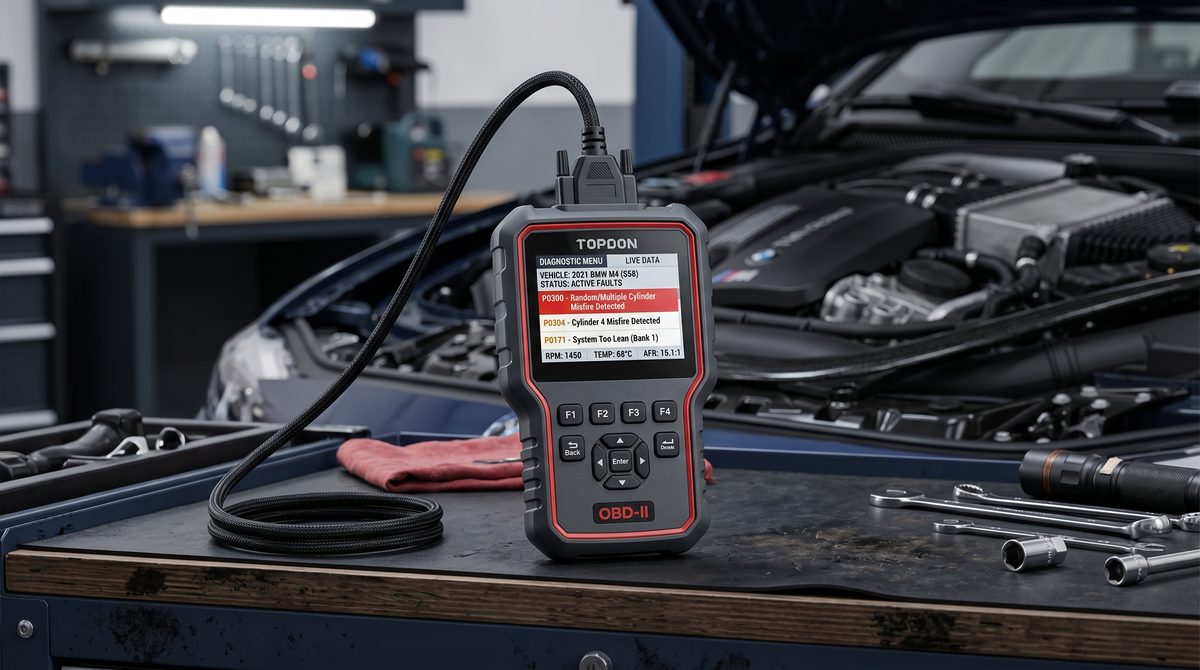
Here's the angle almost no guide covers, and it catches people right before a state inspection: your car runs a set of self-tests called readiness monitors, and clearing a code — or the light going off — resets them. That has real consequences.
Free Code Read vs. Real Diagnosis
The free parts-store scan is worth doing. Just don't let the code become a shopping list.
Any parts store will pull the code for free — a useful first data point.
A code names a symptom, not the failed part — that's where money gets wasted.
The classic trap: a free P0420 read leads to a replaced converter when a $200 sensor was the real fix. The diagnosis is what saves the difference.
What a Proper Diagnosis Looks Like
So you know what to expect. Each step narrows the cause before any part is bought.
We pull every stored code plus freeze-frame and live data — the conditions when the fault set. That context is what separates a real cause from a lucky guess.
Get the Light DiagnosedRather than replace the part the code names, we test it — the sensor, the circuit, the converter — to confirm what's actually failed and what merely looks guilty.
Get the Light DiagnosedYou get the confirmed cause and the price in a written estimate before we touch anything — including the cheap-fix-first path when there is one.
Get the Light DiagnosedP0420 is the classic 'runs fine' code — and it's rarely just the converter. Our P0420 guide explains what it really measures and the cheaper causes to rule out first.
P0420 ExplainedDrivers mention it over and over: we test before we replace, so a check engine light doesn't turn into a needless big-ticket part. That's the whole difference between a code read and a real diagnosis.
Check Engine Light FAQ
For a steady light with no other symptoms, usually yes for a short time — a few days to get it diagnosed. Stop and re-check if the light flashes, the temperature climbs, or you notice new smells, rough running, or worse fuel economy. A flashing light means stop driving now.
The computer logged a fault that hasn't grown big enough to feel yet. It may be compensating for a lazy sensor, running around a minor problem, or watching slow-building damage like an aging catalytic converter. 'Runs fine' means the symptom is small, not that there's nothing to fix.
Cheapest first: a loose or faulty gas cap, an oxygen (O2) sensor, a mass-airflow (MAF) sensor, spark plugs or ignition coils, and a slowly failing catalytic converter. Most of these don't change how the car drives until they get worse, which is why it can feel normal.
Not necessarily. A light can go off if the fault stops tripping for a few drive cycles — like a loose gas cap you re-tightened — but the underlying issue often remains and the light returns. And clearing a code resets the readiness monitors an inspection checks, so 'the light went off' isn't proof it's fixed.
Usually no. In most areas an illuminated check engine light or a stored emissions code is an automatic fail, no matter how well the car drives. Clearing the code right before a test also fails, because the readiness monitors won't be complete. The lasting pass is fixing the cause.
ASE-Certified · ATRA Member · Since 1995
A steady light on a car that runs fine is the cheap window — the moment to find the cause before it becomes a converter or a failed inspection. Our ASE-certified technicians scan it, verify the actual failed part, and put it in a written estimate before any work begins. Not sure if it's flashing or solid? Our flashing-vs-solid guide covers that call.