Transmission Learn Library
The most common signs of low transmission fluid are slipping or delayed gear shifts, a burning smell, whining or grinding noises, a reddish puddle under the car, overheating, and a transmission warning light. Here's the part most guides skip: low fluid almost always means a leak — so topping it off masks the problem instead of fixing it, and the level drops again until the transmission runs dry. Below, the seven signs, a fluid color chart, and why the real fix is finding the leak — reviewed by our ASE-certified transmission technicians.
The One Rule
An automatic transmission is a sealed system. It doesn't 'use up' fluid the way an engine burns a little oil, so if your fluid is low, there is a leak somewhere — a pan gasket, a seal, or a cooler line. Adding fluid without finding that leak just delays the problem: the level drops again, and every mile run low burns the clutches. And if it's actively slipping, overheating, or smells burnt, stop driving and get it looked at — that's the stage where a cheap leak becomes a rebuild.
The 7 Signs
Any one of these is worth a check. Together, they're a leak asking to be found before it does damage.
The engine revs but the car doesn't respond, or there's a pause before it engages a gear. Low fluid means low hydraulic pressure, and pressure is what makes the clutches grip.
Shifts that clunk, bang, or jerk instead of gliding. Without enough fluid to cushion them, the gear changes turn rough.
A whine or hum that rises with speed, or a grind under load. The pump is pulling air instead of a solid column of fluid — a classic low-fluid noise.
A hot, acrid smell means the fluid is overheating and the clutches are starting to scorch. This is the smell of damage in progress.
Bright red or reddish-brown fluid where you park is transmission fluid, and it's the leak itself. Note where under the car it sits — it helps pin down the source.
Fluid carries heat away from the transmission. Too little, and it overheats — the fastest way low fluid turns into permanent clutch and seal damage.
Many cars sense the pressure or temperature problem low fluid causes and light a warning. Don't clear it and keep driving — have the cause read.
Noticing exactly when a symptom happens — cold or warm, at a stop or on the highway — is the single most useful thing you can tell a technician.
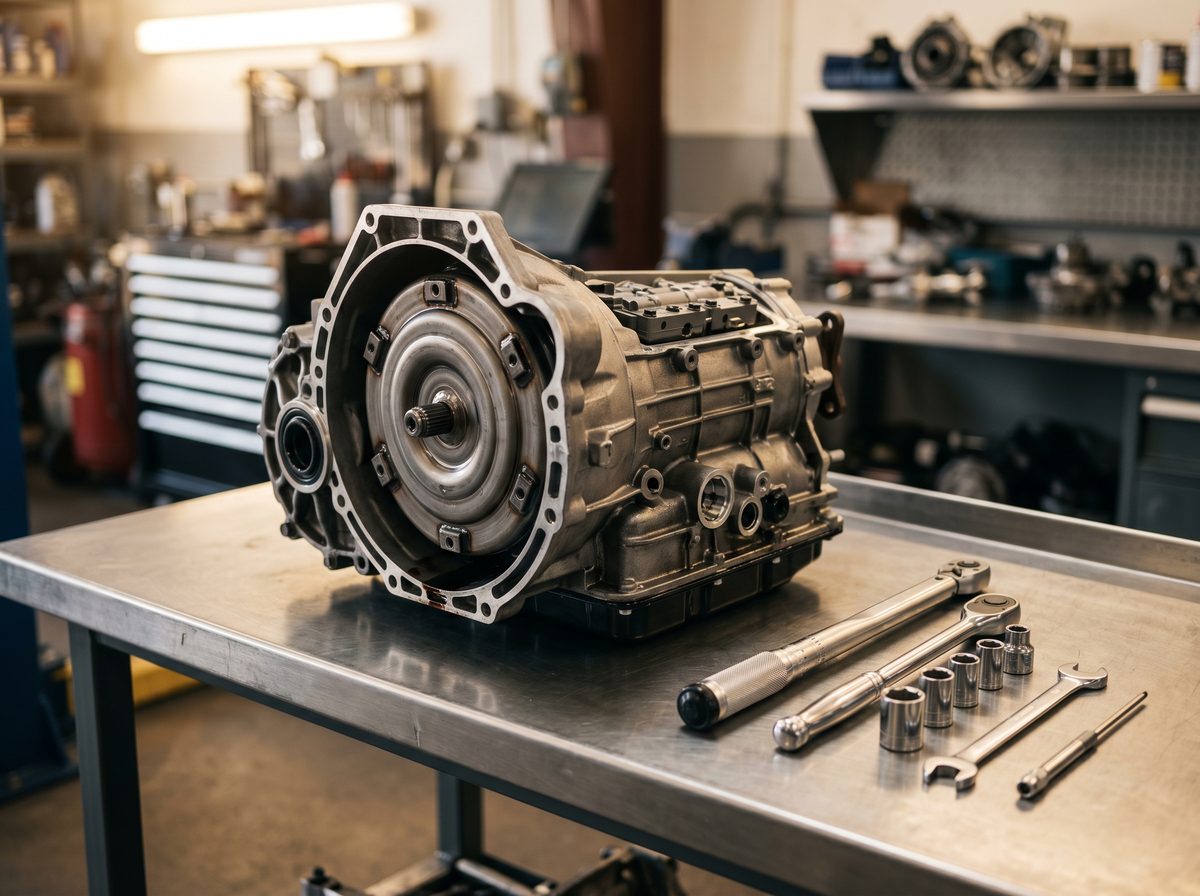
How Low Fluid Actually Wrecks a Transmission
A transmission runs on hydraulic pressure. Fluid is what applies the clutches, cools the parts, and lubricates the gears — all at once. Drop the level and all three jobs suffer, which is why one leak can cascade into a rebuild if it's ignored.
Transmission Fluid Color Chart
Wipe the dipstick on a white paper towel and read the color. It's one of the most honest quick diagnostics you can do yourself.
| Fluid color | What it means | What to do |
|---|---|---|
| Bright, translucent red | Healthy fluid at the right level — exactly what you want to see | Nothing needed; recheck at your normal service interval |
| Light brown | Aging fluid that's starting to oxidize and lose its additives | Plan a fluid service soon; check the level for a slow leak |
| Dark brown | Overdue and heat-stressed; the fluid is past its useful life | Service now and have the transmission inspected for wear |
| Near-black with a burnt smell | Overheating and clutch material breaking down — heat damage | Get it inspected right away; there may be internal damage |
| Pink or milky | Coolant is leaking into the fluid — usually a failed cooler | Stop driving and get it inspected; this damages fast |
| Little or none on the dipstick | A severe leak has dropped the level dangerously low | Don't drive it; top up only to reach a shop, then inspect |
Colors on a screen are a guide, not a lab test — but paired with the symptoms above, they tell you how urgent this is. A proper inspection confirms the fluid's condition and finds the leak.
If You Keep Driving On It
This is the progression a leak follows when it's topped off and ignored instead of fixed.
Every step here was avoidable at the top. The whole point of catching low fluid early is to never reach the bottom of this chain.
Can You Just Add Fluid?
These sound reasonable, and each one lets the real problem keep growing.
Just top it off and you're fine.
Topping off treats the symptom, not the leak. The level drops again, and the stretches spent low are what burn the clutches. A top-off is a way to reach a shop, not a repair.
Lifetime or sealed fluid never needs checking.
'Lifetime' fluid still leaks and still degrades with heat. Sealed just means there's no easy dipstick — it doesn't mean the fluid can't run low or go bad.
Any red fluid will do.
Modern transmissions are picky about fluid spec. The wrong ATF can cause the exact shifting and slipping problems you're trying to fix, so the correct fluid matters as much as the level.
A small leak can wait.
Transmission damage from low fluid is cumulative and heat-driven. A small leak caught now is a seal; the same leak in a few months can be a rebuild.
The honest version: fluid buys you time to get to a shop. The fix is finding where it's going.
Checking It Yourself vs. a Leak Diagnosis
There's real value in checking your own fluid. There's also a clear line where a proper diagnosis takes over.
With the car on level ground and the engine warm, a few minutes tells you a lot.
Finding where the fluid is going, and whether damage has started, is shop work.
A top-off is a bandage; a leak diagnosis is the fix. If you're adding fluid more than once, that's the sign to have the leak found.
How Long Can You Drive On It?
The real question isn't how many miles — it's what those miles cost you. Here's the trade.
Every mile low trades a cheap leak repair for possible internal damage.
Caught at the leak stage, the fix is usually a seal, a gasket, or a line.
Rule of thumb: if it's slipping or overheating, don't drive it — the cheap fix and the expensive one are separated by exactly those miles.
Drivers come back to the same points: an honest diagnosis, a clear explanation, and a fair price on transmission work specifically. Catching a leak before it becomes a rebuild is exactly the kind of call this shop is known for.
Low Transmission Fluid FAQ
The earliest signs are slipping or delayed gear shifts, a burning smell, whining or grinding noises, a reddish puddle under the car, and the transmission running hot or throwing a warning light. Because automatic transmissions are sealed, low fluid points to a leak that should be found before it causes internal damage.
You can top it off to safely reach a shop, but adding fluid is not a fix — low fluid means a leak, so the level will drop again, and running low burns the clutches. The real repair is finding and sealing the leak, then refilling with the correct-spec fluid.
Not far. Even short trips on low fluid overheat the transmission and glaze the clutches, so every mile can trade a cheap seal or gasket repair for a rebuild. Get it inspected before driving any further, especially if it's slipping or overheating.
Healthy fluid is bright, translucent red. Light brown means it's aging; dark brown or black with a burnt smell means heat damage; and pink or milky fluid means coolant is leaking in. Anything past bright red warrants an inspection — see the fluid color chart above.
Not necessarily. Low fluid is often just a leak that's inexpensive to fix when caught early — but left alone, the resulting overheating and clutch wear are what turn it into a genuinely bad transmission. Catching it at the low-fluid stage is the difference between a repair and a rebuild.
ASE-Certified · ATRA Member · Since 1995
Bring us the symptom — the slip, the puddle, the color on the dipstick — and our ASE-certified technicians will find where the fluid is going, check for any damage, and put it in a written estimate before any work begins. Free local towing up to 20 miles on most vehicles if it can't drive in. If it's still slipping after the fluid is topped off, our guide on transmission slipping causes covers what's next.