Transmission Learn Library
The check engine light is on, the scan says P0700, and the parts counter has six theories. Here's the truth: P0700 isn't an engine code at all — it's the transmission's computer raising its hand through the only warning light it has. This guide explains what the code really means, why a basic scanner can't see the detail behind it, and why nobody should replace a single part until someone reads the codes that can. Reviewed by the ASE-certified team at Eagle Transmission & Auto Repair — a family-owned shop that has lived on transmission work since 1995.
The 20-second answer
P0700 — Transmission Control System Malfunction — means the transmission control module (TCM) has detected a fault and asked the engine computer to turn on the check engine light. It's a gateway code: it tells you the transmission has logged trouble codes of its own, but not what they are. The real diagnosis lives in those transmission-side codes, which many basic code readers can't display. Reading them — not replacing parts against P0700 itself — is the first step of any honest repair.
The Gateway Code
Modern cars split the work between computers. P0700 is what it looks like when the transmission's computer raises its hand through a warning light that belongs to the engine.
That's why P0700 so often appears "alone" on a quick scan: the interesting codes were never in the engine computer to begin with.
TCM vs. ECM
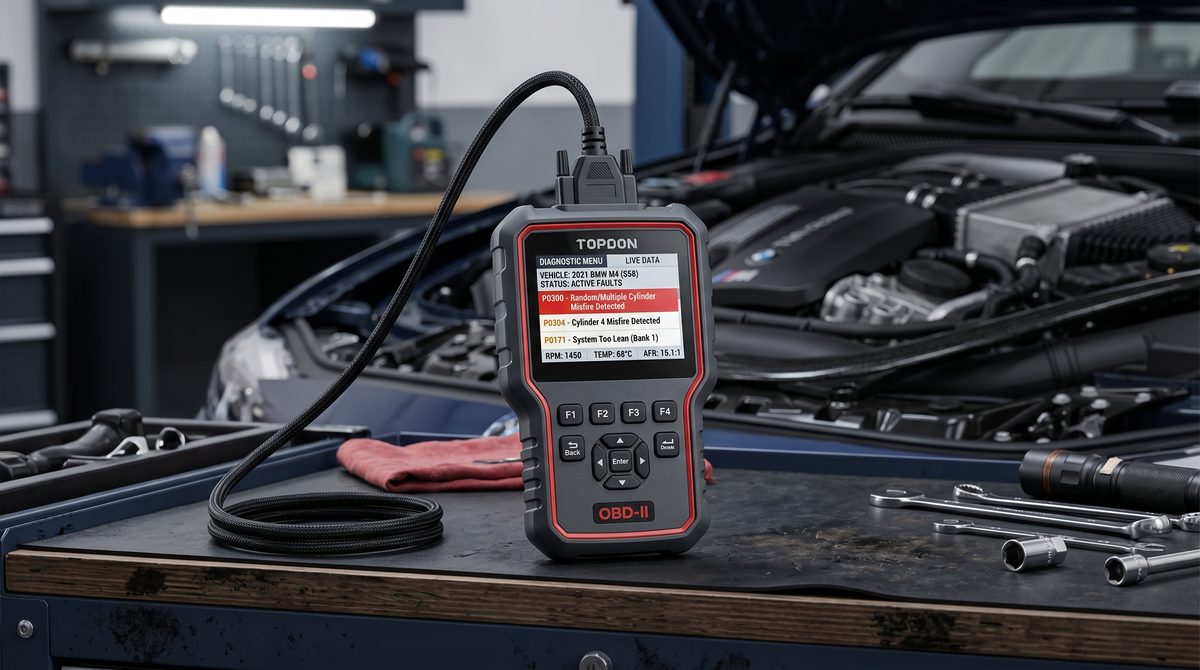
A basic OBD-II code reader talks to the engine control module (ECM), because that's where emissions-related codes live. The transmission control module is a separate computer with its own memory, and pulling its codes takes a scan tool that can address every module on the vehicle — the kind a transmission shop plugs in first. So a quick scan often ends at P0700, which narrows the problem to "the transmission" and not one inch further.
Behind the Gateway
P0700 names no part. The codes stored in the transmission module do — and they group into a handful of families. Here's what each family points at, and why none of them equals a parts order yet.
Live sensor data on a scan tool exposes a dropout in seconds — long before anything gets replaced.
Commanded-vs-actual ratio in the live data, plus a fluid inspection, separates a fluid problem from mechanical wear.
A road test at lockup speeds with slip data on screen shows whether it's fluid-stage or converter-stage.
Electrical tests catch circuit faults; pressure readings catch the rest — teardown only if the evidence calls for it.
Ranges shown are the common OBD-II families, and the same code can have several causes — which is exactly why the code is where diagnosis starts, never where it ends.
From the Driver's Seat
The code rarely travels alone. These are the behaviors that most often show up with it — and what each one is telling you.
Many transmissions respond to a serious fault by locking into a single gear so you can creep home. Chrysler and Jeep drivers know it as limp-in mode. It's the transmission protecting itself — and a clear signal to stop driving and get scanned now.
Engine speed climbing without the car pulling means a clutch or band isn't holding. Every slipping mile adds heat and wear, so this one shortens the repair window fast.
A slam into gear, a long pause before reverse engages, or a gear that never arrives usually traces to the solenoid, pressure, or sensor families above.
A rumble-strip buzz under light throttle is the torque-converter clutch chattering — often still fluid-serviceable when it's caught early.
Some faults set the code before you can feel them. That's the cheapest moment to catch a transmission problem you will ever get.
Whatever rides along with your P0700, describe it when you call — the behavior plus the stored codes is how a specialist narrows the fault before the car is even on a lift.
Before You Buy Anything
P0700 is where a lot of expensive guessing starts. Here's the straight version.
P0700 means the transmission is done — start pricing replacements.
P0700 means the transmission module logged a fault, full stop. Behind it we find everything from a loose connector or a software update to a fluid service, one solenoid, or — sometimes — genuine internal wear. The sub-codes and the physical evidence decide, not the gateway code.
The scan showed P0700, so replace the most likely part and see.
A part bought against P0700 alone is bought blind: the code doesn't name a part, and a part-swap doesn't clear the fault that set it. Solenoid packs, sensors, even whole used transmissions get replaced while the actual cause — readable in minutes from the TCM — was never looked at.
Clear the code — if the light stays off, it's fixed.
Clearing the code erases the freeze-frame evidence a technician diagnoses from, and the light returns the next time the fault repeats. If a fault set once under real conditions, it's recorded for a reason. Read it before you erase it.
The pattern in every row: reading the transmission module costs a fraction of one guessed part — and it's where our diagnosis begins.
What To Do Next
Match your situation. Every path ends the same way: the real code read, the cause verified, and a written estimate before any work begins.
Start with a full-module scan and road test. We pull the transmission-side codes and freeze-frame data P0700 is standing in front of — and tell you plainly what they say.
Check Engine DiagnosticsBehavior plus the code means the transmission itself needs eyes on it — diagnosis first, then repair, rebuild, or something smaller, in writing. Free local towing up to 20 miles covers most vehicles.
Transmission RepairChrysler-family transmissions are famous for limp-in mode, and some "failing" nine-speeds turn out to be software. Our Jeep page covers limp-in, the model families, and the software-first diagnosis.
Jeep Transmission RepairIf the diagnosis does point at major work, Snap and Synchrony financing can spread an approved repair into payments — arranged before the job starts.
Financing OptionsA flashing check-engine light is an active misfire — different from P0700 and more urgent. Our guide explains the two-line rule for when to stop driving.
Flashing vs. Solid Check Engine LightP0705 is a transmission range sensor fault — often a sensor or linkage adjustment, not the transmission itself. The companion-code guide walks through it.
P0705 Range Sensor CodeThat family points at the torque-converter clutch. The P0741 guide covers what it means, the fluid-first check, and when it signals converter work.
P0741 Torque Converter CodeGoogle reviewers call out diagnostics that found the real problem, torque converter work by name, warranties that got honored, and fair pricing. That's three decades of transmission-first work under one roof — ASE-certified technicians, ATRA member.
P0700 FAQ
Serious enough to read, not automatically serious to fix. P0700 only says the transmission control module logged a fault — behind it sits everything from a loose connector or outdated software to worn fluid, one failed solenoid, or genuine internal wear. Until the transmission-side codes are read, no one can tell you which you have. Treat it as a get-it-scanned-soon code, and stop driving if it arrives with slipping or limp mode.
Let the behavior decide. If the car shifts normally and nothing feels different, driving to a shop for a scan is usually reasonable — soon, not someday. If it's slipping, shifting harshly, or locked in limp mode, keep the miles to a minimum: those symptoms add heat and wear with every drive. And if it won't drive safely at all, free local towing up to 20 miles covers most vehicles.
There's no single answer, because P0700 isn't a single problem — it's a pointer at one. A software update, a sensor, a fluid service, and an internal repair are entirely different jobs at entirely different costs. That's why the process is scan first, verify the cause, then put exact numbers in a written estimate before any work begins. Financing through Snap and Synchrony is available on approved credit.
ASE-Certified · ATRA Member · Since 1995
Tell us what the car is doing and what your scan showed — we'll pull the transmission-side codes behind the gateway, verify the cause, and put the fix in a written estimate before any work begins. Free local towing up to 20 miles on most vehicles, and financing available on approved credit.