Transmission Learn Library
The scanner says P0741 — "Torque Converter Clutch Circuit Performance or Stuck Off." In plain English: your transmission's computer told the torque converter to lock up, watched the numbers, and saw slipping where there should have been a solid mechanical connection. This guide explains what that clutch does, why the code sets, which causes are cheap and which aren't, and how to tell when the converter itself has to come out. Reviewed by the ASE-certified team at Eagle Transmission & Auto Repair — a family-owned shop that has lived on transmission work since 1995.
The 20-second answer
Diagnostic trouble code P0741 — Torque Converter Clutch Circuit Performance or Stuck Off — sets when the transmission computer commands the torque converter's lockup clutch to engage and then measures more slip than it allowed for. The engine and transmission never make the solid one-to-one connection they're supposed to at cruising speed. Degraded transmission fluid is the most common root cause, followed by a lazy TCC solenoid, valve-body wear, and — at the serious end — a worn converter clutch itself. Diagnosis runs cheapest-first, and the code only counts as fixed when the slip data says lockup is holding again.
The Mechanics, In Plain Language
P0741 makes sense the moment you understand the torque converter clutch — the TCC. Here's the whole story, from fluid coupling to stored code.
So the code isn't a sensor hiccup. It's the computer reporting a real, measured mechanical event: lockup was ordered, and it didn't hold.
Symptoms
Some drivers get nothing but the check-engine light. Most, sooner or later, notice one of these.
A brief buzz through the floor at steady speed under light throttle is the clutch grabbing and slipping — the classic feel of TCC trouble, and the symptom that most often rides along with P0741.
If the tach reads a few hundred RPM above what you're used to at cruise, the converter isn't locking — and you're paying for that slip on every mile.
An unlocked converter turns engine power into heat instead of motion. A tank or two of noticeably worse highway MPG fits the same story.
Continuous slip is a heat machine, and heat breaks down fluid and clutch material in a hurry. A temperature warning after long highway pulls or towing moves this from annoying to urgent.
Plenty of P0741s are caught during an inspection or an unrelated scan. Silent doesn't mean harmless: the slip and the heat are still happening on every drive.
If the shudder is the part you care about — what it feels like and the stages it moves through — there's a full guide to torque converter shudder in this same library.
P0740, P0741, P0742…
TCC codes are neighbors, not synonyms — each describes a different way the same lockup clutch can misbehave. And a code only narrows the search to a system; it never names the part to replace. Here's how the family splits.
This is the electrical side of the story — the circuit and solenoid get tested before anyone draws a mechanical conclusion.
This page's code: lockup was commanded and measurable slip followed. The slip RPM gets read on a road test and the fluid inspected first — cheapest cause first.
The opposite failure: the clutch won't release, which can make the engine shudder or stall coming to a stop — a different diagnosis run with the same tools.
Same discipline on every code in the family: prove the cause with data before replacing anything, then put the fix in a written estimate.
Causes, Ranked
Four usual suspects, in the order a good diagnosis — and a sane budget — should test them.
The testing order is the cost order — which is exactly why the first response to a P0741 should almost never be "replace the converter."
The Fluid-First Rule
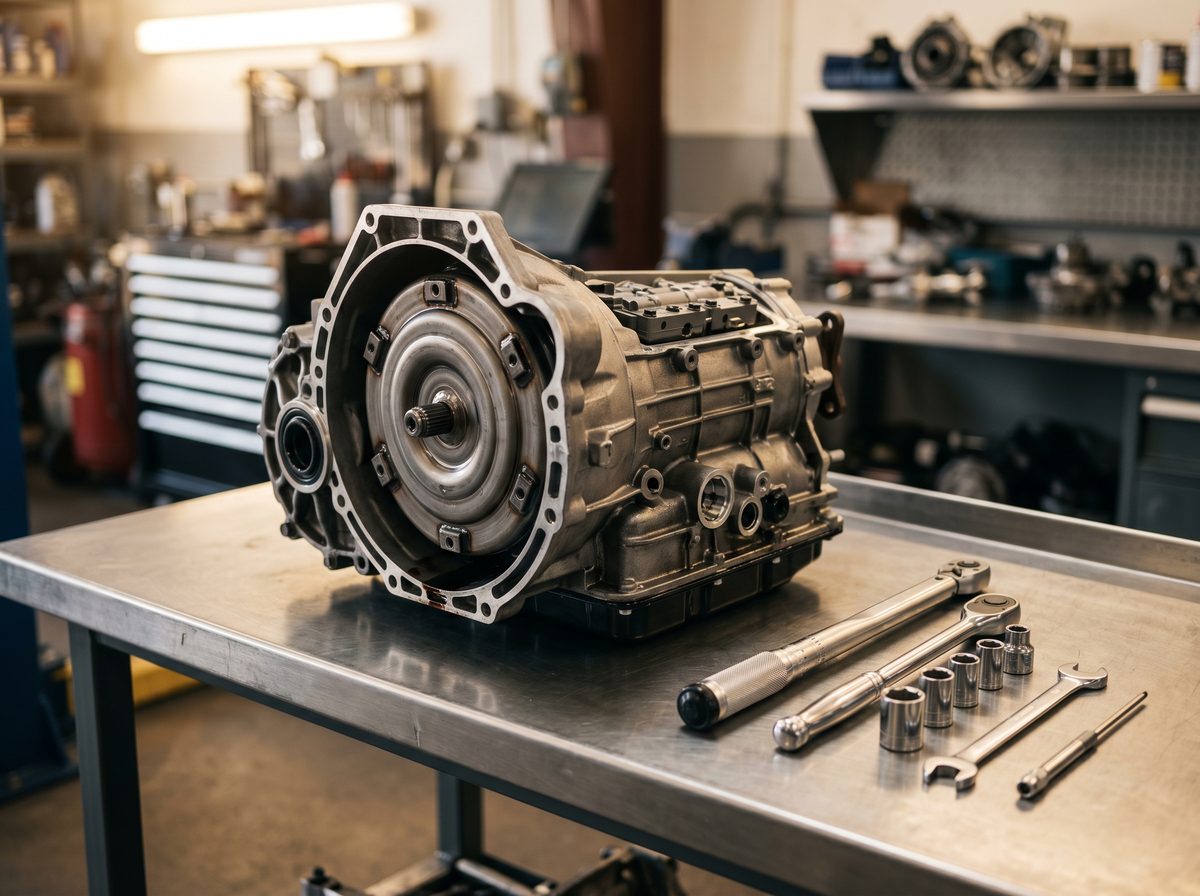
It would be easy for a transmission shop to hear "torque converter code" and start talking teardown. The honest order of operations is the opposite. Worn-out fluid is the most common cause of P0741, and fresh, correct-spec fluid restores exactly the friction behavior the lockup clutch depends on — so when the diagnosis supports it, a professional fluid exchange is the first repair on the table. Catch the code at the fluid stage and there's a real chance the story ends there.
When Fluid Isn't the Fix
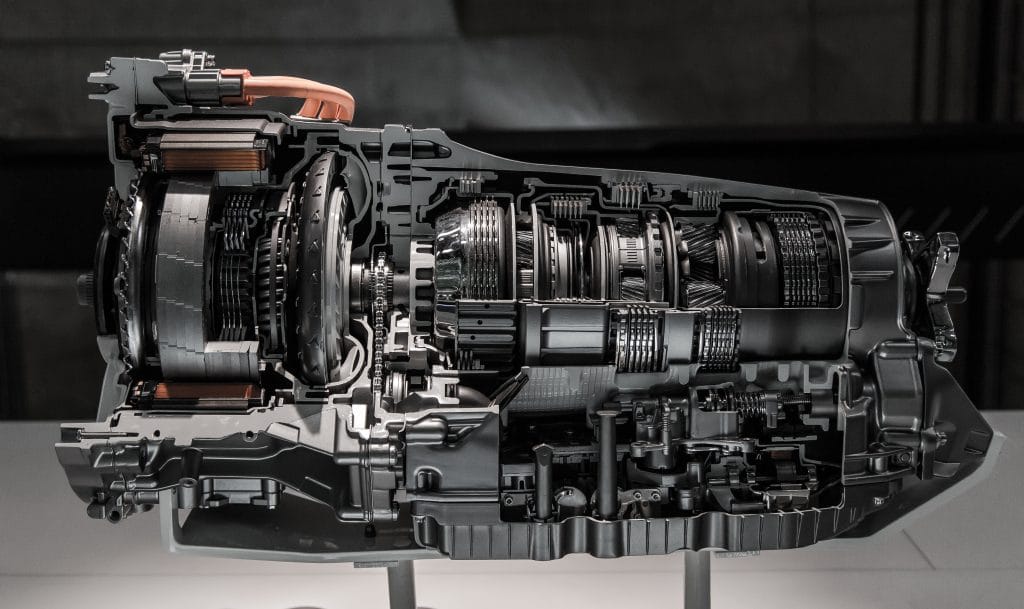
A worn or glazed converter clutch can't be repaired in place — the torque converter is a sealed unit, and reaching it means removing the transmission. That's why converter replacement is handled as rebuild-grade work, and why the call deserves real evidence first: slip that persists after a fluid service, friction material showing up in the fluid, or a converter that has been slipping long enough to overheat everything around it.
Where This Leads
Match your situation. Every service path starts with a road test and scan data, and ends with a written estimate — never a blind quote.
The fluid-stage catch. A professional exchange puts fresh, correct-spec fluid through the whole system — converter included — and gives the clutch back its grip. The cheapest possible ending for a P0741.
Transmission Fluid ChangePersistent slip means the converter clutch — and possibly what its debris has touched — needs rebuild-grade work. See what a real rebuild includes and how the decision gets made.
Transmission RebuildThe rumble-strip buzz has its own full guide — what it feels like, the stages it moves through, and the truth about shudder-fix additives. This page owns the code; that one owns the feeling.
Torque Converter Shudder, ExplainedP0741 rarely travels alone, and stored codes need reading in context. A staged diagnosis pulls the codes, freeze-frame, and live data — and only goes as deep as the fault needs.
Check Engine DiagnosticsWhen Google reviewers mention torque converter work, straight diagnoses, and warranties that get honored, that's the exact discipline a P0741 needs — data first, the cheapest proven fix first, and the converter only when the evidence says so. That's how this shop has run since 1995.
P0741 FAQ
Usually yes in the short term — P0741 rarely strands anyone overnight. But a slipping converter clutch generates constant extra heat, and heat is what kills transmissions: it breaks down the fluid faster, wears the clutch lining harder, and slowly turns a fluid-stage fix into a converter-stage one. Book a diagnosis soon, and treat towing or a long highway trip as a reason to move faster.
Often, when it's caught early. Degraded fluid is the most common cause, and a professional exchange restores the friction behavior the lockup clutch depends on. It isn't guaranteed, though: if the slip data shows the clutch lining or valve body is already worn, fresh fluid won't bring the code back to a pass. That's why the fix is verified with a road test and scan data after the service — not assumed.
It depends on which cause you have. At the cheap end, the fix is a fluid exchange — a routine maintenance service. At the serious end, the converter has to come out, which means transmission-removal labor and rebuild-grade work that industry-wide runs many times the cost of a fluid service. No one can price that accurately from the code alone, which is why diagnosis comes first and the numbers land in a written estimate before any work begins.
ASE-Certified · ATRA Member · Since 1995
Tell us what the scanner found and what the drive feels like, and the diagnosis will tell you which stage you're at — fluid, solenoid, valve body, or converter — with the evidence and a written estimate before any work. Free local towing up to 20 miles covers most vehicles, and Snap and Synchrony financing is available on approved credit.