Car Care Learn Library
Most cars need a minor service — an oil change plus an inspection — every 5,000 to 7,500 miles, plus major service milestones at 30,000, 60,000, 90,000 and 120,000 miles. Severe driving — short trips, towing, heat, stop-and-go, or dusty roads — shortens every interval, so match the schedule to how you actually drive, not to a dealer's upsell calendar. Below, the committed chart, how to tell whether you're on the severe schedule, and the honest word on what the dealer pads — reviewed by our ASE-certified technicians.
The One Rule
There are two real schedules, 'normal' and 'severe,' and the honest truth is that most everyday driving is severe: short trips, stop-and-go, heat, and towing all shorten intervals. So the right schedule is the one that matches how you actually drive, not the lighter calendar a service desk quotes to sell the most visits. Use the committed chart below as your baseline, then shorten it if you drive severe — and skip the padding we'll name later.
The Full Schedule
The committed milestone chart — real answers instead of 'check your manual.' Exact items vary by vehicle; scroll sideways on a phone.
| Service | 30,000 mi | The big one 60,000 mi | 90,000 mi | 120,000 mi |
|---|---|---|---|---|
| Engine & cabin air filters | Replace | Replace | Replace | Replace |
| Brake fluid | Flush | Flush | Flush | Flush |
| Transmission fluid | Service if severe | Service | Service | Service |
| Engine coolant | Inspect | Flush | Inspect | Flush |
| Spark plugs | — | Many vehicles | Replace | Replace |
| Timing / serpentine belt | Inspect | Inspect | Inspect / replace | Replace |
| Brake pads & rotors | Inspect | As needed | As needed | As needed |
| Tires | Rotate | Rotate & check tread | Rotate | Replace likely due |
This is the baseline for normal driving. Oil and filter changes continue every 5,000 to 7,500 miles throughout. The service links below take you to what each job actually involves — and we confirm your car's exact needs in a written estimate.
Normal vs. Severe — Which Is Yours?
If any of these sound like your driving, your real intervals are shorter than the 'normal' calendar. Find yours.
Trips under about 10 miles don't fully warm the engine or boil moisture out of the oil, so contaminants build up faster. This alone puts most commuters on the severe schedule.
Towing, hauling, or a roof load makes the engine, transmission, and brakes work far harder and run hotter — which shortens fluid and brake intervals meaningfully.
Hot climates, deep cold, and dusty or gravel roads all stress fluids and filters faster. Heat is especially hard on transmission fluid and coolant.
Long, steady highway miles in a moderate climate are the one case that fits the lighter 'normal' schedule — the minority of real-world driving.
If you land in any of the first three, use the chart above as a starting point and shorten the fluid and filter intervals. When in doubt, we'll tell you which schedule your driving really calls for.
Where 'Lifetime' Is a Myth
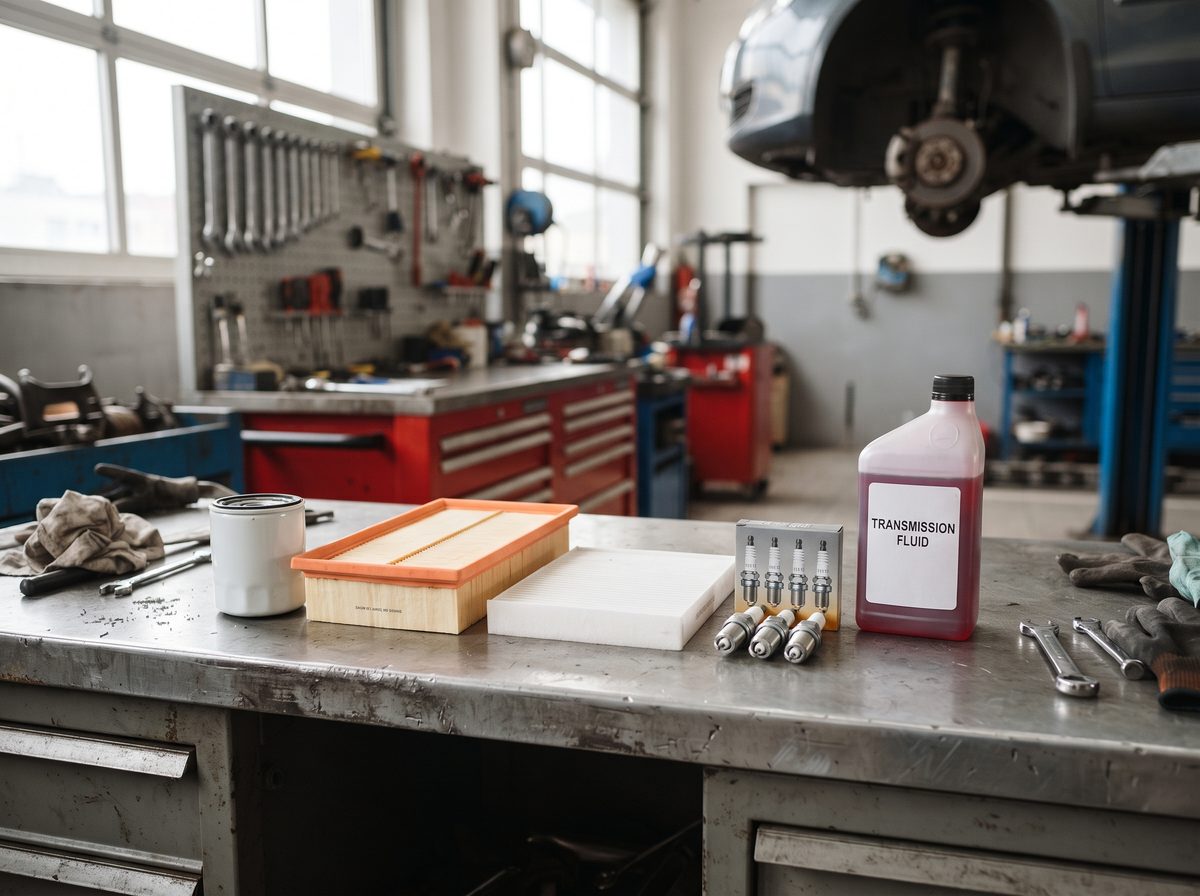
As a transmission shop, this is the maintenance item we watch cost people the most — because so many are told they never have to do it. 'Lifetime' transmission fluid is largely a marketing term.
What the Dealer Upsells
Real interval work matters. These are the extras that pad a service ticket — the section no dealer page will write.
An engine or fuel-system flush at every visit.
Genuine fluid changes matter, but frequent add-on 'flushes' usually don't — a healthy engine on regular oil changes rarely needs them. Do the real fluid services; skip the routine flush upsell.
Early or 'extra' transmission fluid swaps beyond the real window.
Servicing fluid on the real schedule is smart; being sold it far ahead of the interval, or repeatedly, is padding. Match it to the mileage-and-driving windows above.
Premium fuel or premium oil 'required' when the manual says otherwise.
Unless your manufacturer specifies it, premium fuel and top-tier oil upgrades usually don't add value. Follow the spec in the owner's manual, not the counter pitch.
Replacing parts 'while we're in there' that aren't worn.
Sometimes bundling genuinely saves labor; often it's selling parts that had life left. Ask for the measured condition — and a written estimate — before agreeing.
The rule of thumb: pay for the interval work, question the add-ons, and get it in writing. We quote every job in a written estimate before any work.
What Skipping Really Costs
Deferred maintenance is the most expensive kind. Here's the pattern behind the big repairs we see.
Every one of these started as a routine interval. Staying on schedule is the cheapest insurance a car has — and when a repair is unavoidable, we quote it in writing first.
The Services Behind Your Schedule
Every service on the chart links to what it covers, so you can see exactly what you're paying for at each mileage.
The recurring minor service — oil, filter, and a multi-point inspection every 5,000–7,500 miles.
Coolant inspection and flush at the milestone intervals to prevent overheating.
Belt inspection and replacement at spec — a skipped timing belt is a major engine risk.
Your By-Mileage Checklist
The chart above is your at-a-glance checklist — save it, and check where your odometer sits against it. When you're near a milestone, here's the simplest way to stay ahead of it.
Drivers mention it again and again: we tell them what actually needs doing at each mileage and what the dealer was padding. An honest maintenance schedule is worth more than a long one.
Maintenance Schedule FAQ
A minor service — an oil and filter change with a multi-point inspection — every 5,000 to 7,500 miles, with bigger milestone services at 30,000, 60,000, 90,000 and 120,000 miles. Severe driving shortens these intervals; the chart above gives the committed schedule for each milestone.
Roughly: at 30K, the engine and cabin air filters, brake fluid, and a brake and tire inspection; at 60K, transmission fluid, coolant, brake pads and rotors as needed, and spark plugs on many cars; at 90K, spark plugs, a timing and serpentine belt inspection or replacement, hoses, and fluid refreshes. Exact items vary by vehicle, which we confirm in a written estimate.
'Severe' service applies to short trips, towing, extreme heat or cold, stop-and-go traffic, and dusty roads, and it shortens most intervals. Most everyday driving actually qualifies as severe, even though dealers often quote the lighter 'normal' schedule.
No. Genuine interval work — real fluid changes, a timing belt at spec, brake fluid — matters. But frequent engine flushes, 'premium fuel required' claims, and early or 'lifetime' fluid swaps are often padding. An honest shop tells you what can wait and quotes it in writing first.
'Lifetime' or 'sealed' fluid is largely a myth. As a real-world guide, change it around every 30,000 to 60,000 miles under severe use and 60,000 to 100,000 miles under normal use. Skipping it is one of the most expensive maintenance mistakes a driver can make.
ASE-Certified · ATRA Member · Since 1995
Tell us your make, model, and mileage, and our ASE-certified technicians will lay out exactly what your car needs next, what can wait, and what the dealer was padding — in a written estimate before any work begins. Whether it's an oil change, brakes, or a transmission service, you'll get the honest schedule. Free local towing up to 20 miles on most vehicles if it can't drive in.